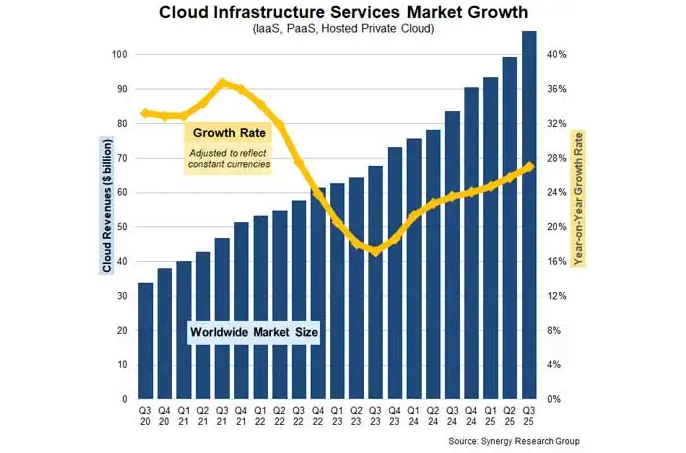
Customer Relationship Management (CRM) software is nearly a $119 billion global market today, and Salesforce is the undisputed leader in the category today. But just as Salesforce once disrupted the likes of Oracle and Siebel, AI is now ushering in new players and new rules of engagement that are decisively shifting the battleground.
Data has become ground zero for AI, and customer data is among the most valuable data out there given its proprietary nature. This makes CRM a natural place for AI to play. As a result, what used to be a competition over features and market share is now a fight over something much deeper: access to that data and the intelligence, revenue and differentiation that can be derived from it.
The market for CRM software has become increasingly competitive, but there’s a broader question on people’s mind these days: Will AI interfaces and agents render the CRM software category irrelevant? Will companies even need a CRM at all if they can move to an AI user interface on top of some structured data source? Will Salesforce get their hat handed to them by their AI-native competitors?
Our take? CRM isn’t going anywhere. And it would be a mistake to underestimate Salesforce.
However, the competition for incumbent CRM players is going to get more and more intense, and the competition and evolving buyer expectations are going to force these vendors and their service partners to evolve fast.
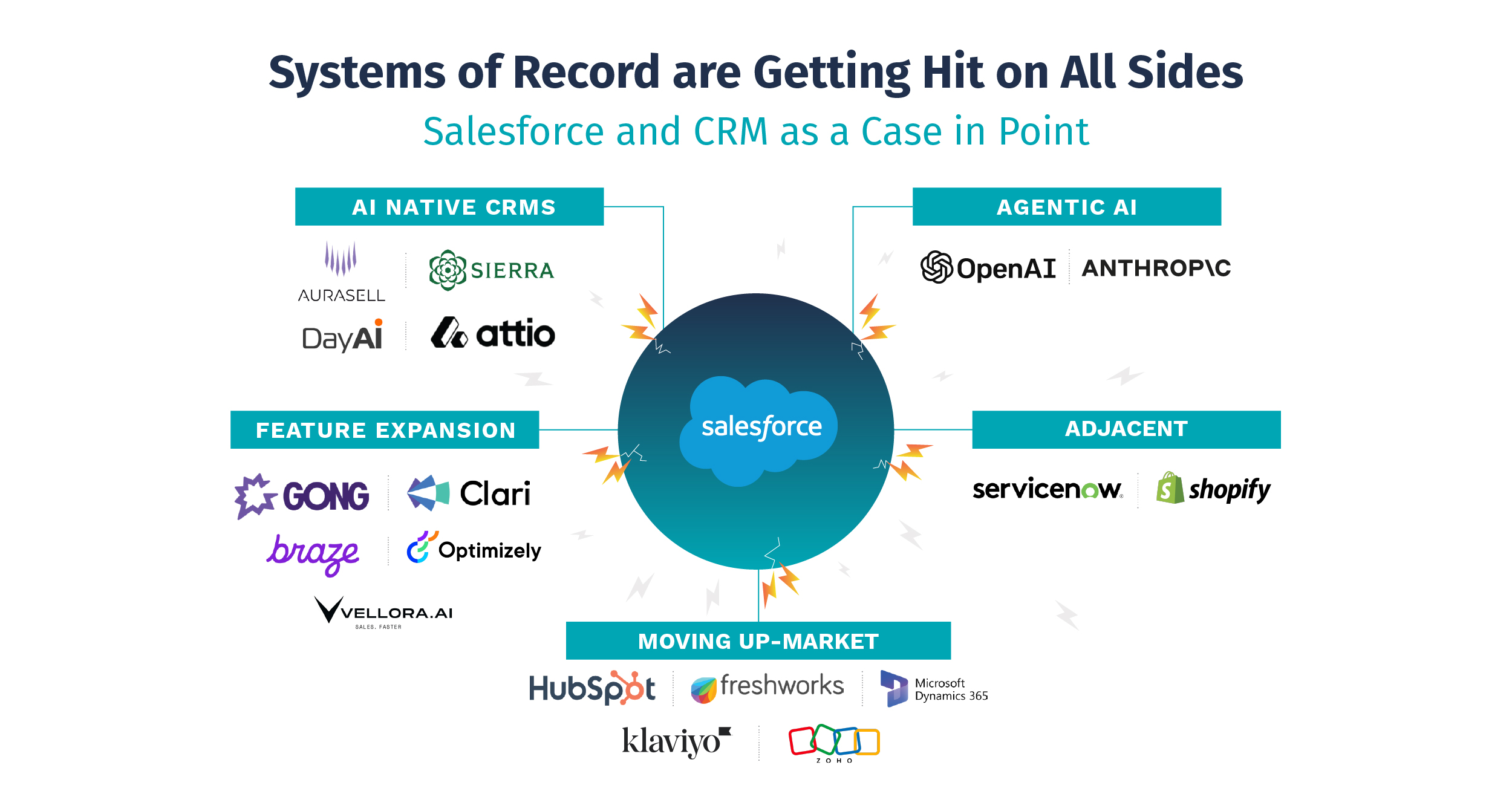
Rise of the AI-native CRM players
Bessemer’s State of AI 2025 report highlights the shift that’s happening from systems-of-record to systems-of-action, calling it a once-in-a-generation shift. It’s no longer enough to just store customer data and function as a “single source of truth.” Modern platforms are increasingly expected to allow both humans and AI agents to act on that data — proactively, intelligently and securely.
Many experts believe CRM will look more like an invisible orchestration layer, updating itself automatically, interpreting customer signals across channels, and recommending (or taking) the next-best action before a rep can even open a laptop. With tools like this, productivity could skyrocket, and customer-facing teams can focus on higher value interactions.
It’s already starting to happen as AI-native CRMs introduce faster, cheaper, and more agile workflows:
- Sierra, co-founded by former Salesforce co-CEO Bret Taylor, helps companies automate customer support across chat, email and voice while keeping humans in the loop.
- Aurasell markets itself as an AI-native GTM platform that aims to collapse different tools such as data enrichment, forecasting and coach-agents into a single intelligent platform.
- Day AI bills itself as a system of record that reasons and a GTM chief of staff all in one, promising to eliminate manual entry and maintain pipeline in real-time.
- Attio positions itself as an AI CRM and system of action for modern GTM teams that is highly customizable to specific types of businesses.
And by this time next year, there will likely be far more players on this list.
At the same time, a growing class of AI-forward vendors are building intelligent layers that sit on top of core platforms like Salesforce. They’re not trying to replace the system of record, but rather to extend or automate parts of the CRM experience where the core platform may lag. These solutions tend to do things like automate requirements, setup and configuration (Auctor, Sweep, Swantide), provide process and organizational intelligence (Hubbl), enforce data hygiene and governance (Clarify.ai), or accelerate GTM operations (Vellora).
Less competitors and more partners, these solutions will help make CRMs stickier, more intelligent, and better aligned with business needs.
Existing platforms expand
It isn’t just the AI-natives that are putting pressure on the incumbents. Vendors that traditionally focused down-market or in areas adjacent to sales and marketing (e.g. commerce or business operations) are also capitalizing on the AI disruption and buyer skepticism, and making moves into Salesforce’s territory.
SMB players, most notably Hubspot, are beginning to take share in the enterprise by promising customers simplicity, affordability and AI-driven productivity.
Platform players like Shopify and ServiceNow are expanding into CRM territory by building out their platforms and layering in AI-driven workflows. Shopify, for example, has evolved from a pure-play e-commerce solution into a holistic commerce platform that incorporates crucial aspects of CRM such as customer segmentation, personalized marketing, and post-purchase engagement.
ServiceNow, traditionally a leader in other internal workflows like IT and HR, is aggressively moving into the space with acquisitions like Logik.ai and Moveworks, and they are making a concerted effort to build out their partner ecosystem in this area.
This convergence means that the CRM wars are no longer confined to the historical rivalry between established CRM vendors. They now involve broader platform battles where the winners will be determined by the ability to offer the most unified, intelligent, and workflow-centric customer engagement solutions.
The dark horse: The AI platforms
And then there are the broader AI platforms that are quickly making their way into nearly every business process, including CRM.
OpenAI has trained millions of users to treat ChatGPT like a universal interface. We are quickly being trained to see conversational AI as the default starting point for information retrieval, content generation and task completion, and agents (autonomous AI) may soon automate a good portion of our day-to-day workflows.
Anthropic’s introduction of Claude Cowork, an agentic product that plugs into existing tools and platforms to complete multi-step business tasks, triggered a SaaS selloff in recent months as investors worried about the application layer becoming commoditized. And while we believe the ‘SaaSpocolypse’ is overblown – especially when you look at the continued growth for many of these SaaS companies – it’s clear that LLMs are starting to shift user behaviors and how enterprises think about internal processes.
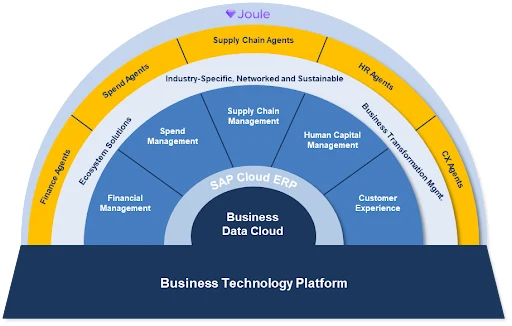
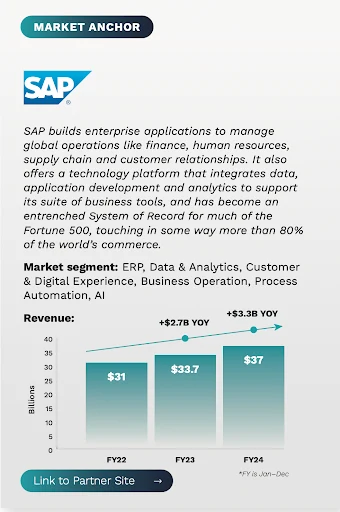
As these models and workflows become more sophisticated, it stands to reason that many business users will prefer to transact directly inside an AI chat interface without bothering to log into CRM or ERP at all. However, anyone who thinks that this is the death knoll for a category, and that platforms as deeply entrenched as the likes of Salesforce or SAP will go away anytime soon, likely hasn’t worked inside a large, complex enterprise recently. These vendors are deeply entrenched in business processes and change happens slower than most pundits predict.
Salesforce is under pressure but not out of the game
Salesforce is most certainly under pressure from all sides, but don’t count them out. The CRM giant has reinvented itself many times before and we have confidence they’ll do it again.
Salesforce’s annual R&D investment stands between $5-6 billion and it’s been increasing year-over-year. That spend is primarily going toward rebuilding itself around AI. They are also more focused than ever on profitability, giving them plenty to work with when it comes to acquiring AI-native and foundational capabilities. Their M&A machine has kicked back in aggressively with 12 acquisitions over the last 18 months.
Salesforce’s vision for the Agentic Enterprise, its moves with AgentForce, and its relationships with senior buyers, as well as the biggest AI and data vendors, are keeping Salesforce at the forefront of AI conversations with customers. But two other areas give Salesforce a very compelling moat: it’s extensive service partner ecosystem and the vast amount of customer data they sit on.
As long as they protect those two assets, and use their immense resources to modernize their platform, we have no doubt Salesforce will continue to be a trusted vendor in the AI era.
The battle moves to the experience layer
Ultimately though, the winners in CRM will be those that leverage their strengths to stay innovative at the experience layer, where customers and employees actually interact with the system. That’s where AI’s value becomes most visible. A sales rep doesn’t care if their CRM has the cleanest schema in the world; they care if it helps them close deals faster. A customer cares less about the underlying data model than they do that their service request is resolved in seconds.
This is why agentic AI and orchestration tools are so disruptive. They shift the focus from records to results, from storing data to delivering outcomes in the exact moment of interaction. Which is why the winners will be defined not by who owns the record, but by who can orchestrate the action that makes the experience a success.
For services firms, that requires having a deep understanding of not just tech platforms and how they work, but also how data flows and agents work across systems and within processes. It means having the ability to build experiences around platforms, which requires industry expertise and deep domain knowledge. All of which are traits that we look for in our future investments.