Investments

Empowering growth-focused businesses and people

We’re on a mission to change the equation for people-based businesses.

Companies and leaders come to a certain juncture in their journey when it’s necessary to rethink the approach that gotten them to where they are. Growing to $5M in revenue is not easy, but in those early stages, a powerful vision, a few talented people and customers and sheer brute force can get you pretty far. However, what might fuel initial growth spurts cannot necessarily sustain a company in the long-term. Growing an organization north of $100M takes a different approach and a different set of skills.

Not every leader is ready to scale their company beyond that first plateau, which is why the world is packed with hundreds of thousands of small professional services firms that do amazing work, but never get beyond $5M or $10M. As experts agree, it takes a growth mindset and more process-oriented approach to build something that goes beyond that, something that endures.

Our goal at Tercera is to identify those who are ready, who do have that growth mindset. And then to empower them with the capital, counsel and connections they need to grow bigger and faster than they could without help.

We believe capital is the easy part. There are plenty of equity partners out there, but finding one that really understands your space and can provide the specific counsel and guidance you need to get beyond those first few plateaus of growth is difficult. This is where the magic of our methodology and advisor community comes into play.


Tercera’s 5 Elements Methodology


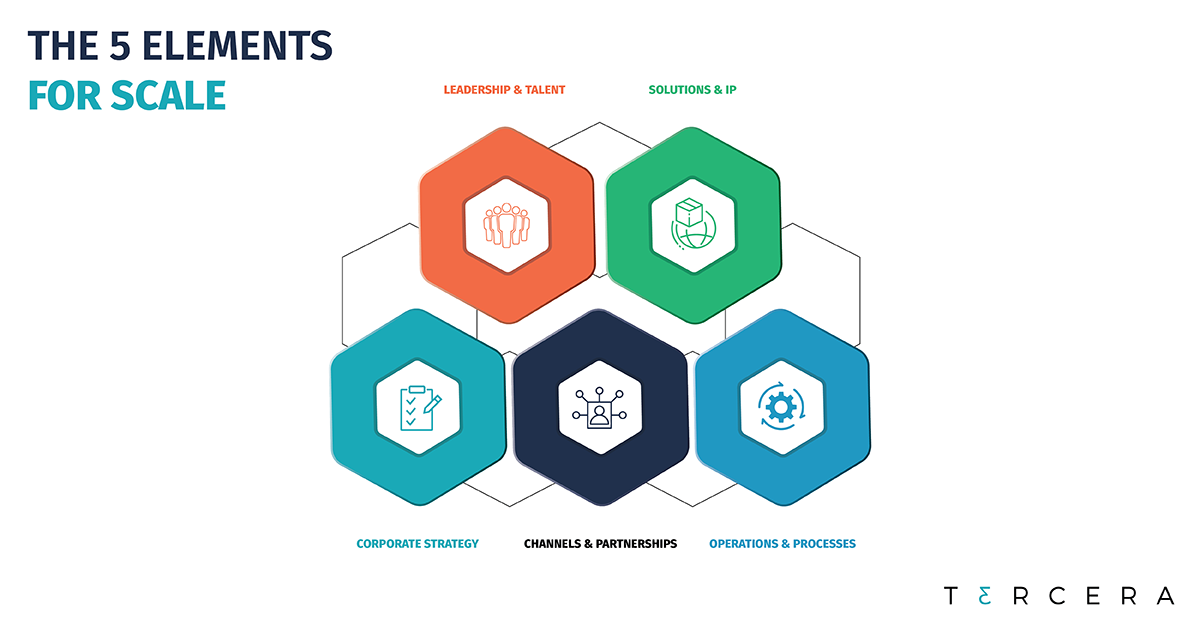
We developed Tercera’s 5 Elements for Scale based on decades of experience operating and selling professional services businesses. It is the framework we use when evaluating potential portfolio partners, the methodology we use during our first 100 days of working with a partner to prioritize where investments can make a difference, and how we look at building out our Advisor network. Over the years, we’ve found that most companies are great in one or two areas, good in a couple more, but could use help in the others.

Our 5 Elements for Scale are broken up into (this should not surprise you) 5 areas:

Leadership & Talent: The people piece of the puzzle, always integral to the success of any company, is critical in a professional services company. In this area, we look at everything from the strength of an organization’s culture and diversity, to its recruiting and onboarding capabilities, to its leadership development and overall talent management processes.

Corporate Strategy: In early stage growth mode, many leadership teams lean more towards execution than strategy. For sustainable growth, you need both. This element looks at a firm’s strategic planning process, brand and marketing capabilities, sales and account management strategy, and how M&A and international expansion come into play.

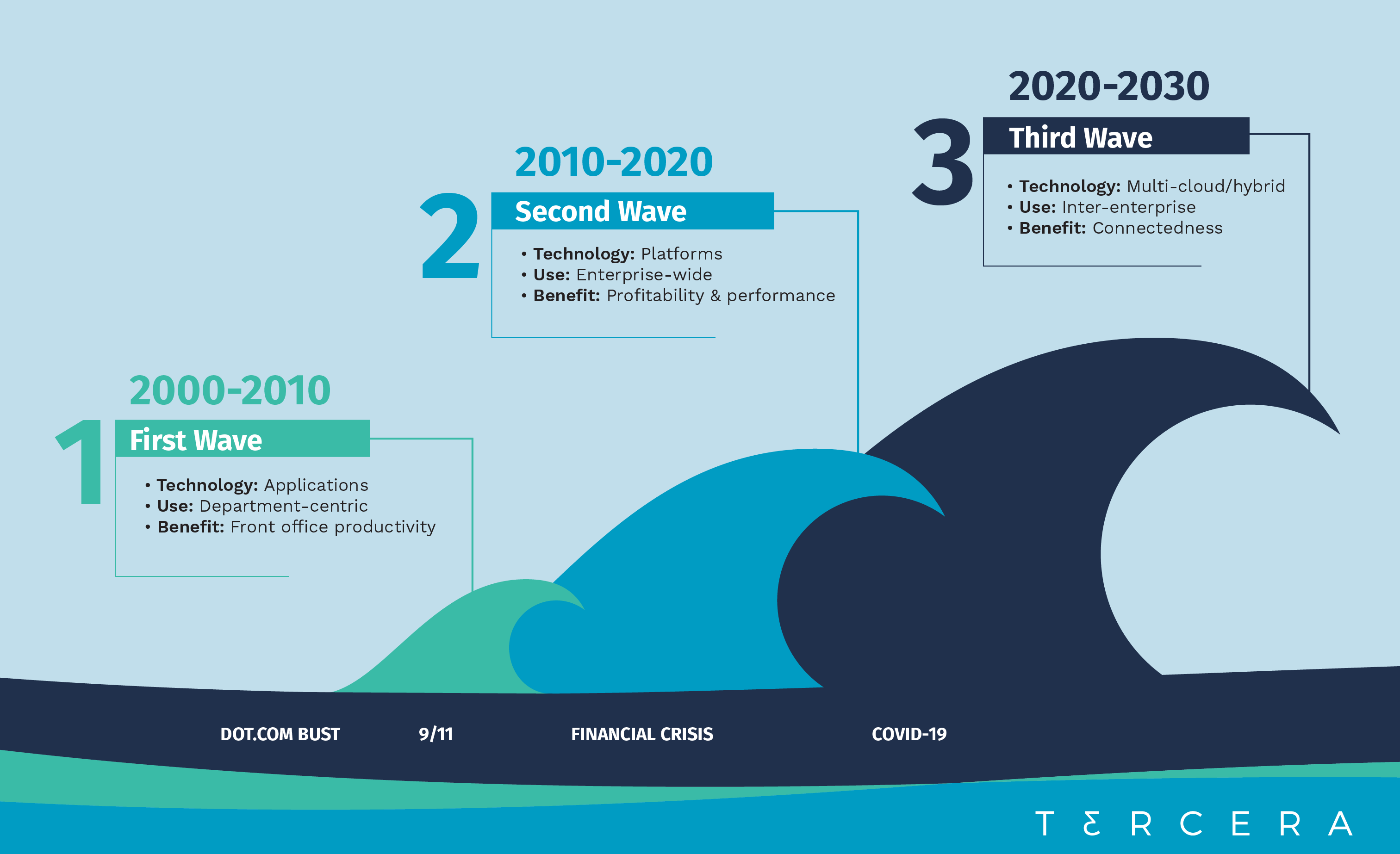
Solutions & IP: The professional services firms that will lead in the cloud’s Third Wave will offer a different set of skills and delivery models than those who led in previous waves. Expertise in cybersecurity, AI, DevOps, and hybrid cloud operations are needed more than ever, and vertical IP and productized solutions are no longer nice to have, but must haves. This element looks at a firm’s overall portfolio, reusable assets, product roadmap and more.

Channels & Partnerships: For services companies, success often depends on going to market with the right ISV as well as creating the right partnerships to grow revenue, attract customers, and expand awareness. This element looks at a firms’ overall market positioning, alliances strategy, channel marketing and adjacent partnerships.

Operations & Processes: While this element may be listed last, we find it’s the one with which most younger services firms need the most help. Startups tend to look at process as a bad thing, but when it comes to scaling, having solid processes matters a lot. Those firms that are buttoned up in how they manage their financials, delivery operations, talent, marketing and sales processes have a big leg up on the competition.


Growth comes from all directions

While we believe this methodology can make a huge difference in preparing leaders and their organizations for that next phase of growth, if it falls upon deaf ears, it’s of little value. This is why we look for potential portfolio partners with a growth mindset — specifically, founders who are coachable and open to change. Not because we want to change everything about a company or tell founders how to run their business, but because every great company goes through periods of change, transition, and even reinvention. And we want to work with great companies.

When we say coachability, it means people who are open to feedback, self-aware, good listeners and lifelong learners. You’d be surprised at how easy these traits are to recognize, even in first meetings. Coachability is a key trait shared among leaders with the highest potential and it’s integral to building trusting relationships. People want to work with and for leaders who know their own strengths and limitations, who can acknowledge problems when they arise, and who surround themselves with others that have that same mindset.

If that sounds like you, and you are ready to do bigger things with your business, hit us up here.

Tercera’s belief in founder-led businesses

We believe strongly in the power of founder-led businesses for two main reasons.

First and foremost, we believe in founders because founders believe in their companies. Their business is personal to them, and that gives them a unique combination of vision, passion and mission that is essential to building something that lasts.

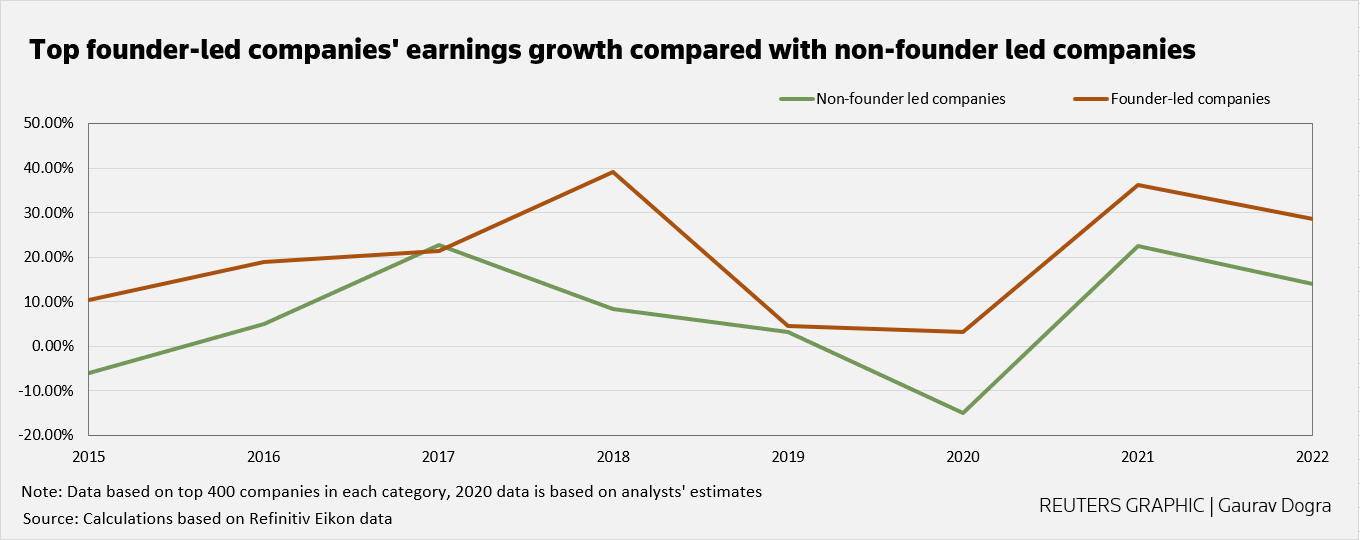
Secondly, data shows founder-led technology businesses tend to outperform companies who are led by hired guns. It isn’t always the case, but it’s the case more often than not. Studies featured in HBR and Reuters (among others) show that companies that still have a founder at the helm often do better in price performance, profit growth, innovation and recovering faster from a crisis.


Founders have a passion that fuels their mission

Founders will run through a brick wall to see their mission come to life. Whether it’s their entrepreneurial mindset, personal connection to the mission, or sheer perseverance, they’re virtually unstoppable, and that kind of passion is contagious with customers, partners and employees.

You can feel it in leaders who still helm the companies they founded: Jeff Bezos’ obsession with customer-centricity, Marc Benioff’s dedication to making Salesforce a platform for change, or Reed Hastings’ quest to reinvent entertainment. It’s not just the big guys either. Smaller technology players like Twilio, Okta, Slack, HashiCorp, who still have an active founder continue to outperform their peers and see huge valuations.

It’s this mix of passion and mission that keeps a company going even when there are only a few wins to celebrate — a situation every company goes through no matter how great it is. It’s what inspires other people to work hard, stick around, and treat every customer like the business depends on it. In professional services, where hundreds or thousands of consultants might be customer facing, and where recruiting and retention is a KPI, this mix is even more important.

Don’t get us wrong, the 1s and 0s are still important, and you still need to find great technologists, but people aren’t loyal to bits and bytes. They’re loyal to people. And founders — the exceptional ones — care about the people and the culture that binds the company together.


Freedom for Founders to Build and Lead

We don’t just look for exceptional founders, we also give them the freedom to do what they do best – build and lead. This is one of the reasons we typically choose to take a minority rather than majority stake in our investments.

As former operators and founders ourselves, we take more of an entrepreneurial mindset, not a strictly economic one. We’ve been there. We know the challenges and opportunities that come with scaling a professional services business. What it takes to grab market share and break through those plateaus of growth – getting beyond $10M or $50M to $100M and beyond. Breaking through those first few plateaus can be tough and many people do it, but the decisions and sequenced investments needed to navigate beyond $50M are considerably more challenging. We know what it takes to scale a services business, and how to sustain profitable growth over time. Part of that is capital, but that’s only a fraction of the equation.

Our role as invested operators isn’t to take over that journey for our portfolio founders, it’s to give them the guidance, capital and connections they need to navigate the journey for themselves.

Tercera balances the world of private equity in that we provide guidance to operationalize and scale a business, and the world of venture capitalism in that we come in early and help founders and ideas flourish.

If it sounds like the kind of partnership you’re looking for in your journey, hit us up here.

Prepare for a flood in 2021…of capital and M&A in professional services

In a year that started out like this one, with a global pandemic increasing in strength and riots at the U.S. Capitol (and we’re only on Day 12), it seems only natural to start my first blog of the year with a reference to a flood. Luckily, what I’m talking about is a surge of a different kind.

We believe 2021 may finally be the year professional services (especially in the cloud space) gets its due from the investment community and strategic acquirers. Professional services firms in the cloud space are being acquired at a rate we haven’t seen since the early days, despite the efforts of many companies to conserve their cash reserves in a down economy. We believe this is just the beginning of a flood of capital investment in people and people-based businesses, especially those that have the expertise for what’s to come.

Here’s why.


The Cloud Just Got More Important

The year 2020 highlighted many things for business leaders — the value of empathetic leadership, the importance of diversity, the delicate balance of real-time inventory, and that remote work is possible and even preferable. It also proved to business leaders the real value of their cloud computing investments.

When COVID-19 reached pandemic status in March and the world closed up shop, nearly everything moved online — meetings, commerce, learning, entertainment, banking, events, dining “out”, socializing, even tourism. With little to no notice, millions of employees were sent home with just their laptops. More than 9 months later, most of these employees remain working from home (possibly for good), yet work continues to get done. Cloud-powered tools and systems like Zoom, Slack, Okta, Box, Twilio, Google Docs, Microsoft Teams, Salesforce, ServiceNow (and hundreds of other apps) have kept employees productive, customers engaged and the economy running.


2020 proved to business leaders the real value of their cloud computing investments.


COVID flipped a switch when it comes to how work and business gets done, and that light is going to stay on and increase in intensity over the next few years. The term digital transformation is so overused I hate to even put it here, but 2020 highlighted that fact that businesses needed to rethink and redesign a good number of their processes and do it fast. Some businesses adapted quickly and some didn’t, but even those who reacted quickly need to sustain, fortify and expand those efforts. To systematize and optimize the new processes they put in place. And that takes more than technology. It takes people.


Cloud Success = Professional Services

Redesigning systems and processes, especially in complex enterprise environments, doesn’t happen overnight and it’s not easy. Companies need strategic thinking, specialized skills and domain expertise, and unfortunately the people who have this expertise are becoming harder and nearly impossible to keep.

The IT skills gap isn’t a new problem but COVID has exacerbated it. The cloud providers get this. It’s why Amazon recently announced an ambitious plan to train 29 million people to work in cloud computing by 2025. It’s the reason Salesforce invests millions in its Trailhead learning platform every year, and continues to introduce workforce development programs as a big part of its corporate strategy.


The IT skills gap isn’t a new problem but COVID has exacerbated it…It’s also why major professional services firms continue to grow in a down economy.


It’s also why major professional services firms continue to grow in a down economy. Accenture’s Q1 FY21 results were up 4%, with “strong double digit” growth in cloud services. Annual FY2020 revenue for Deloitte’s Consulting Division increased more than 7%. Even the small and mid-sized professional services firms that we spend a lot of time with are growing in double, and in many cases triple, digits.

This demand for cloud and digital talent is also driving a significant amount of M&A volume in cloud services.


The M&A Race for Talent

Dozens of acquisitions in the cloud professional services space have gone down over the last few months, including three yesterday alone — IBM’s acquisition of Salesforce consultancy 7Summits and Cognizant’s acquisitions of Australian analytics firm,Servian, and ServiceNow consultancy, Linium. In the last 12 months, Cognizant has made 11 acquisitions and invested what many estimate to be a $1.4B in cloud, data, AI and digital services.


In the last 12 months, Cognizant has made 11 acquisitions and invested what some estimate to be $1.4B in cloud, data, AI and digital services.


IBM has also been extremely acquisitive lately as its new leadership looks to refocus on hybrid cloud computing and AI, and build up its iX business unit to compete with Deloitte Digital, Avanade and Accenture. The acquisition of 7Summits, which is estimated to be ~$175M, approaching a 3.5x multiple on revenue, is just the latest. In late 2020, IBM announced plans to acquire SAP consulting partner TruQua for its hybrid cloud and financial workflow expertise, Instana for its AI-powered automation capabilities, and Nordcloud for its cloud-native tools, methodologies and talent.

And then there is all the activity in the Salesforce space, including Salesforce’s own $570M acquisition of Acumen.

But it’s important to note these acquisitions aren’t just about adding more consultants to the roster, it’s about gaining a competitive advantage from the specialized expertise, approach and assets these next-generation firms bring. All of which are needed to meet the evolving needs and escalating demands of customers.


These acquisitions aren’t just about adding more consultants to the roster, it’s about gaining a competitive advantage from the specialized expertise, approach and assets these next-generation firms bring.


Here are four attributes that we believe will become even more in-demand in PS firms over the coming year — by customers, software providers looking to build their ecosystem, and by other firms looking to acquire.


Hybrid & Multi-Cloud Expertise: Whereas earlier cloud waves required firms to specialize and go deep on certain platforms, next generation firms have to work across clouds and in hybrid enterprise environments. This is an imperative for inter-enterprise business requirements like multi-modal e-commerce and real time supply chains. DevOps expertise is a must and full stack knowledge is essential. Talent within teams that can support infrastructure and data layer providers like AWS, Hashi, Twilio, Snowflake and Datadog, will be as important as the application layer skill sets.


Integrated Offerings for Accelerated Transformation. Note, accelerated transformation not digital transformation. Digital transformation might be as overused as unprecedented and the new-normal these days. Customers want partners who can help them in ways beyond just implementation and integration. True transformation requires a blend of strategy, design, delivery, ongoing change management, optimization and maintenance, and it doesn’t (or shouldn’t) happen all at once. It’s an iterative process. The firms that offer an integrated portfolio that crosses these different disciplines, that can deliver those services seamlessly and quickly, are a lot more attractive to customers who want a long-term partner. COVID forced everyone to move much faster and proved transformation can happen in months not years. Customers need partners who understand that and continue to meet that standard going forward.


A Globally Diverse and Enabled Virtualized Workforce. The workforce looks and operates very differently than it did a decade ago (or even a year ago). Customers are much more open to remote work and now expect, and can have access, to diversity in their consulting partner teams. The partners who have built effective workforce models in these areas will have a leg up in recruiting and retaining top talent. Firms built from the ground up that embrace remote working and truly invest in collaboration technologies, policies and processes will outrun and outperform those saddled with significant commercial real estate and old school collaboration approaches.


IP Driven Industry Solutions. The verticalization of the cloud continues, and customers are looking to partners who have proven expertise in their industry and who can bring reusable, productized IP to hit the ground running. This is especially important when it comes to AI/Machine Learning, automation, data and integrated commerce.


As the next wave of cloud adoption takes hold, we believe these are the characteristics of the services firms who will lead this wave. Because 2021 is shaping up to be the year for cloud talent to scale to new heights and move in new directions.

A quest to prove, once again, that services businesses don’t suck

October marks the four year anniversary of Wipro’s acquisition of Appirio — an incredibly emotional day for me personally.

On that day I was so proud of what our team had built and excited to see where the journey would lead. Over the next 2+ years, I spent my time integrating Appirio into Wipro to help smooth the transition and to infuse elements of the Appirio culture into Wipro’s broader organization as the company’s first ever Global Culture Officer. In the years following, I joined various boards, started a few small businesses I’m passionate about, supported a number of amazing non-profits, and joined GGV Capital as a Venture Partner where I got the opportunity to work with an incredible group of founders and entrepreneurs.

About a year ago, after grazing across all these endeavors and enjoying the slower pace of ‘life on the lake’, I found I was craving more. I wanted to build something again. I wanted to have an outsized impact on an industry I cared about and a team I helped put together. The gravitational pull from friends, advisors, recruiters kept pushing me towards running a software business. While my history and track record has largely been in professional services, the software landscape was attractive. It was new, it was different, there were tons of opportunities, and as most investors will tell you, the exit economics tend to be a lot more favorable in software (provided you pick the right horse of course!).

Which got me thinking. Why does the professional services space get so short changed? While software is eating the world, it’s people who must build, deploy and use that software!

Why is the prevailing thought by VCs and PE firms that services sucks?! Sure, services businesses can be hard. Sure, people are harder to predict than 1s and 0s. Sure, services firms might not see the same kind of multiples as a software business. However, that doesn’t make them a bad investment. Just different. Appirio is a great example of how a services firm can still provide a great ROI for investors, and there are far more Appirios out there than you might think.

My gut, my personal fun factor, kept bringing me back to services. The question then became what should I do in the services space. Should I build another Appirio on the back of newer cloud technologies? Should I join an Appirio like firm as a COO, President? Should I invest in and combine a set of cloud services companies and join their board?

I knew I wanted to build something again, but through my VC and board experiences, I also realized how much I love helping others build as well.

Luckily, Jeff Richards and the GGV team allowed me to offroad a bit from traditional software themes while I was at the firm, and I had the opportunity to study the emerging cloud landscape. I saw the value and demand for third-wave cloud companies like HashiCorp, Twilio, Okta, Atlassian, Datadog, Snowflake, Splunk, Slack, as well as the ecosystems (or honestly, lack thereof) that supported them. We mapped out the ecosystem landscape of ~20 ISVs along with their roughly 7,500 services partners, and the opportunity slowly presented itself.

There is not a single new Appirio to be built here, but rather an opportunity to create a firm that can help scale dozens of firms across these ecosystems. An opportunity not just to deploy capital, but to provide thoughtful advice and guidance based on my own failures and successes. An opportunity to provide insight into the patterns, playbooks and best practices that can help a services company scale well past that $10M, to $100M and beyond, while connecting founders with industry experts who can provide the strategic and executional help they need.

This is why I’m so excited to introduce Tercera, our new company that is focused 100% on identifying and building the next generation of cloud professional service providers. Tercera, Spanish for third, will specialize in the third wave of cloud computing — specifically, the ISVs and their service partners who are providing the data, automation, enablement and security layer that is so critical for digital transformation.

We’re building Tercera to be a different kind of firm. Part growth equity, part advisory, part industry network. Our goal is to combine the best of these worlds to help founders gracefully scale and achieve outsized outcomes.

As of 10-15-20, Tercera has officially begun its soft launch phase. We’re already in the process of building out our team and our “neighborhood” of experts, have met with more than 40 firms across our target ecosystems. Stay tuned for our formal launch in the coming quarters, along with announcements on these first investments.

In the meantime, if you’re a third-wave professional services firm who thinks we might be a good partner for you, or an advisor who wants to join our quest, hit me up on our website or on LinkedIn.

Onward, again!